Skip to content

Introducing 04-10-26: the dedicated sort code for legal transactions.   Find out more

For law firms

Three ways law firms handle client money

Under the SRA Accounts Rules, every arrangement on the market is one of three models: your own client account, a pooled third party managed account (TPMA), or Kord.

Three questions tell them apart: who holds the client money, where the checks live, and whether your firm can rely on them.

  • Client account, checks on top

    Your account at any bank, tools bolted on
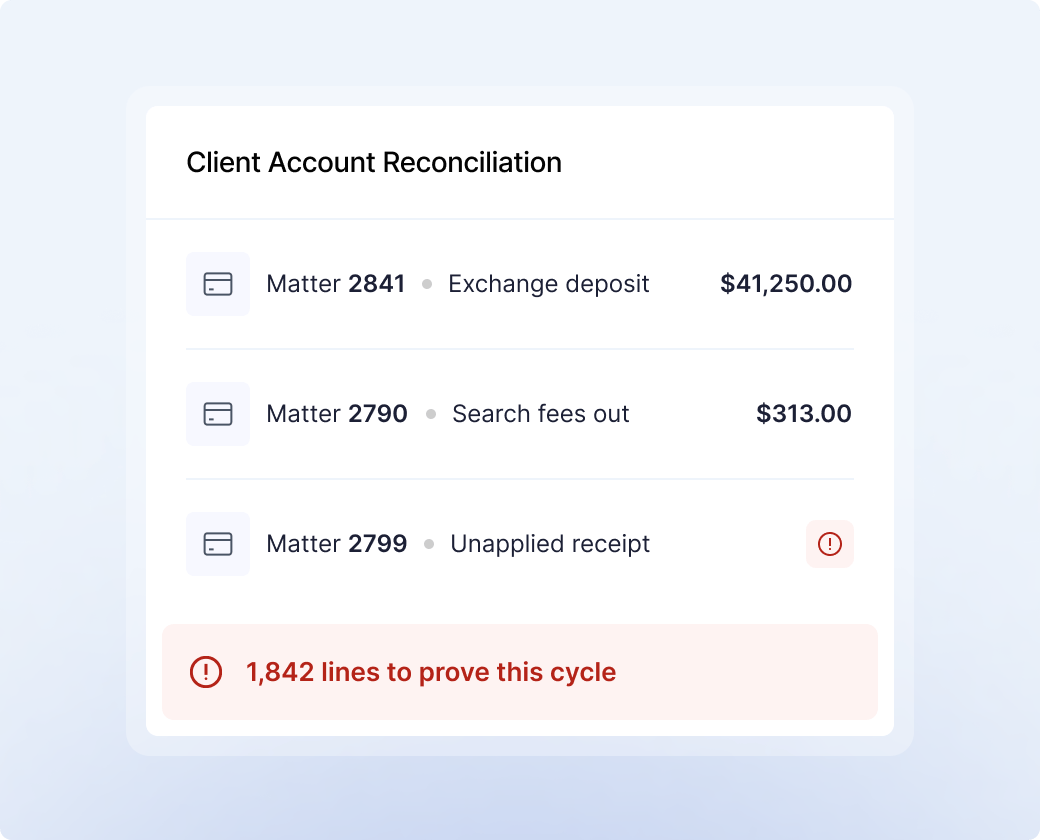
    Many firms manage client funds in their accounts, using various identity and screening tools. While effective, the responsibility for these funds rests solely with your firm. The Accounts Rules apply to the holding, whether the bank is a renowned institution or a modern API-based challenger.
    • Verify customer identity
    • Monitor customer risk
    • No reliance
    • Five weekly reconciliations
    • Fair interest policy
    • Annual accountant's report
    • Full CDD liability retained
    • Tool subscriptions stack up
    • Banking facility risk
  • Pooled TPMA, checks on top

    A provider holds the money; tools still bolted on
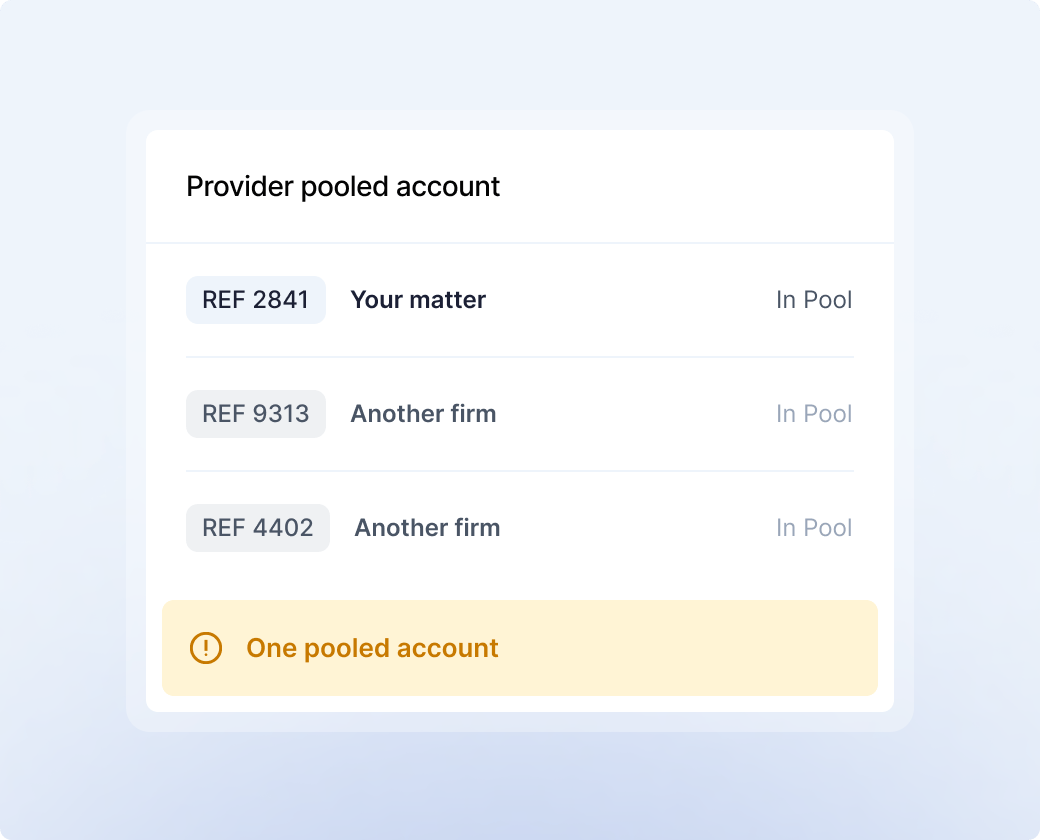
    The first step is a third-party managed account, where an FCA-regulated provider holds the money instead of your firm, typically in pooled safeguarded accounts with your matters as ledger references. The holding leaves your firm, along with much of the burden. However, checks remain separate tools alongside the money, and all CDD liability stays with your firm. Your matter is just an entry in someone’s ledger, not a standalone account.
    • Removes the holding
    • Checks bolted on
    • No reliance
    • Matters as pooled ledger references
    • Full CDD liability retained
    • Checks bought separately
    • Bespoke pricing per firm
    • Provider's identity on the account
  • Legal Transaction Sort Code

    Kord matter accounts on 04-10-26
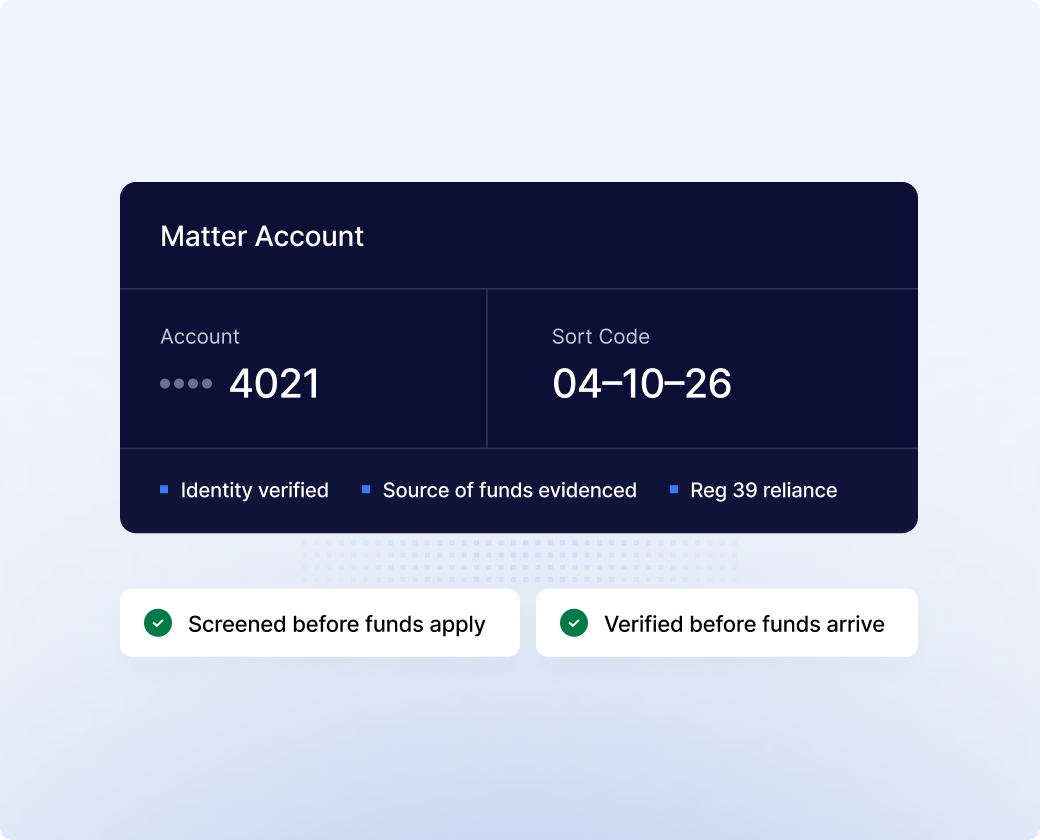
    Each matter gets a unique account number. Identity and source of funds verification are integrated into the account before funds arrive, allowing your firm to rely on Regulation 39: it shares the work, not the accountability. Your firm neither holds nor receives the money, so it’s not client money, and the burden of holding is lifted. This is explicitly allowed by Rule 11 of the SRA Accounts Rules.
    • Removes the holding
    • Checks inside the account
    • Reg 39 reliance
    • Unique account per matter
    • Identity verified in the account
    • Source of funds evidenced
    • Regulation 39 reliance
    • Maker and checker on every payment
    • FPS and CHAPS on every account
    • Ordinary bookkeeping suffices

How the three models compare

  • Unchanged burden
  • Partly reduced
  • Built in

Whether reporting obligations change for your firm depends on your circumstances and the SRA Accounts Rules; confirm with your COFA and reporting accountant.

Ready to build on trusted infrastructure?

Get in touch with our team today and get a glimpse of how 04-10-26 can fit into your model.